Fruity
Green
Woody
Top Notesbergamotfig tree leaveslemonmintpomegranate
Heartcardamomfigjasmine
Base Notesblack teacashmere woodcedarwoodincenseleatheroudpatchoulistyrax
Tags
#beast
#sexy
Style
unisex
Rest in the blissful shade of an orchard in the humming city of Pompeii: the year is 195 BC. Inhale the sweet aroma of ripe figs and the local pomegranate leaves heated by the sun; these entine spicy incense being smoked in the nearby temple. So anciently refreshing!
All about this fragrance
Vibe check
This is for close, warm spaces where freshness needs depth: a shaded terrace, a quiet room, skin still carrying the day’s heat. It projects a sensual, slightly untamed presence, with green fruit and incense giving the wearer an intimate but unmistakable aura.
How to wear
Best in mild to warm weather, where its fig, mint and citrus-green facets can breathe without losing the smoky base. Apply moderately; a few sprays are enough, as the incense, oud and woods give it lasting presence and a fuller trail on skin and in still air.
Who it’s for
For wearers who like green-fruity scents with a darker, resinous edge: fig, mint and pomegranate up front, then incense, cedarwood and woods underneath. It suits people who want freshness with sensuality, and brightness with a grounded, smoky finish.
Release year
2019
The nose
Maurizio Cerizza is the nose behind 195 A.C., a perfumer known for composing with clarity and balance, often giving niche fragrances a polished structure that lets individual materials read distinctly. In this scent, he shapes the contrast between sunlit fig, aromatic mint and pomegranate, and a darker base of incense, cedarwood and woods, creating a composition that feels both airy and substantial. Cerizza’s work here reflects a style that values texture and contrast over ornament: freshness is not treated as a simple opening effect, but as part of a layered, evolving accord. That approach suits Agatho’s historical concept well, allowing the fragrance to move from Mediterranean brightness into a more smoky, temple-like depth without losing its lift.
Collaborators
Alessandro Bianchi, Agatho Parfum’s founder and CEO, shaped the house’s creative direction around the revival of Pompeian perfumery and the use of high-quality natural materials; for 195 A.C., that concept clearly guided the historical imagery and the fragrance’s ancient-Rome narrative.
Agatho’s story
Agatho Parfum builds its identity around a modern reimagining of Pompeii’s olfactory heritage, combining historical inspiration with contemporary niche perfumery. The house emphasizes high-quality natural materials, artisanal presentation and a dialogue between ancient luxury and present-day refinement.
195 A.C.’s concept
195 A.C. draws on the imagery of Pompeii and the symbolic year 195 BC, linked to a Roman repeal of luxury restrictions and the idea of a renewed celebration of pleasure. The scent frames that moment as an orchard in the city: ripe fig, pomegranate leaves and sun-warmed greenery drifting toward nearby incense, as if fruit and temple smoke were sharing the same air.
Extra info
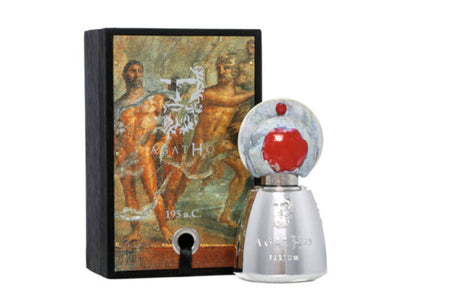
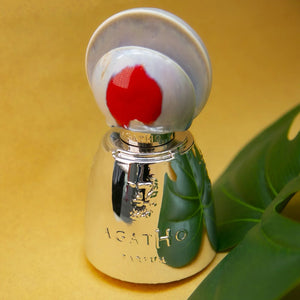
195 A.C. is part of Agatho Parfum’s Pompei Collection and is described as one of the house’s best-loved fragrances. Its presentation is notably luxurious, with a silk-lined wooden box and a porcelain cap made in the Capodimonte tradition.
Top Notesbergamotfig tree leaveslemonmintpomegranate
Heartcardamomfigjasmine
Base Notesblack teacashmere woodcedarwoodincenseleatheroudpatchoulistyrax
Tags
#beast
#sexy
Style
unisex
Rest in the blissful shade of an orchard in the humming city of Pompeii: the year is 195 BC. Inhale the sweet aroma of ripe figs and the local pomegranate leaves heated by the sun; these entine spicy incense being smoked in the nearby temple. So anciently refreshing!
All about this fragrance
Vibe check
This is for close, warm spaces where freshness needs depth: a shaded terrace, a quiet room, skin still carrying the day’s heat. It projects a sensual, slightly untamed presence, with green fruit and incense giving the wearer an intimate but unmistakable aura.
How to wear
Best in mild to warm weather, where its fig, mint and citrus-green facets can breathe without losing the smoky base. Apply moderately; a few sprays are enough, as the incense, oud and woods give it lasting presence and a fuller trail on skin and in still air.
Who it’s for
For wearers who like green-fruity scents with a darker, resinous edge: fig, mint and pomegranate up front, then incense, cedarwood and woods underneath. It suits people who want freshness with sensuality, and brightness with a grounded, smoky finish.
Release year
2019
The nose
Maurizio Cerizza is the nose behind 195 A.C., a perfumer known for composing with clarity and balance, often giving niche fragrances a polished structure that lets individual materials read distinctly. In this scent, he shapes the contrast between sunlit fig, aromatic mint and pomegranate, and a darker base of incense, cedarwood and woods, creating a composition that feels both airy and substantial. Cerizza’s work here reflects a style that values texture and contrast over ornament: freshness is not treated as a simple opening effect, but as part of a layered, evolving accord. That approach suits Agatho’s historical concept well, allowing the fragrance to move from Mediterranean brightness into a more smoky, temple-like depth without losing its lift.
Collaborators
Alessandro Bianchi, Agatho Parfum’s founder and CEO, shaped the house’s creative direction around the revival of Pompeian perfumery and the use of high-quality natural materials; for 195 A.C., that concept clearly guided the historical imagery and the fragrance’s ancient-Rome narrative.
Agatho’s story
Agatho Parfum builds its identity around a modern reimagining of Pompeii’s olfactory heritage, combining historical inspiration with contemporary niche perfumery. The house emphasizes high-quality natural materials, artisanal presentation and a dialogue between ancient luxury and present-day refinement.
195 A.C.’s concept
195 A.C. draws on the imagery of Pompeii and the symbolic year 195 BC, linked to a Roman repeal of luxury restrictions and the idea of a renewed celebration of pleasure. The scent frames that moment as an orchard in the city: ripe fig, pomegranate leaves and sun-warmed greenery drifting toward nearby incense, as if fruit and temple smoke were sharing the same air.
Extra info
195 A.C. is part of Agatho Parfum’s Pompei Collection and is described as one of the house’s best-loved fragrances. Its presentation is notably luxurious, with a silk-lined wooden box and a porcelain cap made in the Capodimonte tradition.